How Iran-Israel War is Increasing E-commerce Product Prices in 2026
 Nafeesa Parveen
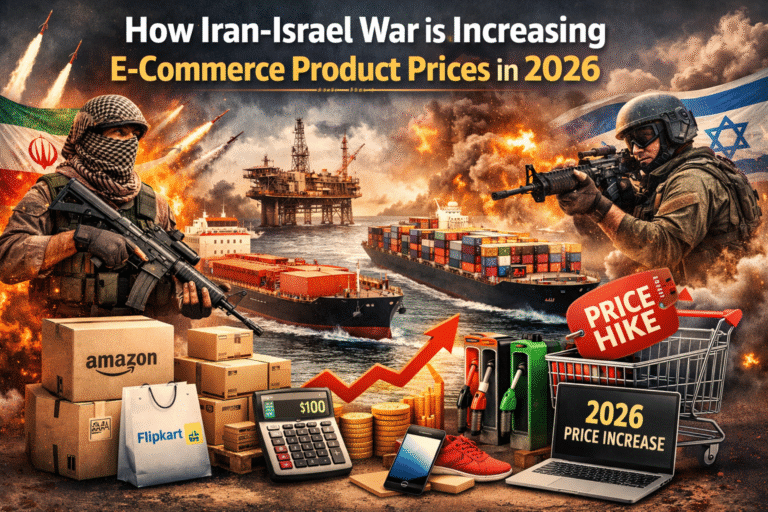
The Iran-Israel conflict is driving higher oil prices, disrupting global shipping, and increasing e-commerce product costs in 2026.
🛒 How Iran-Israel War is Increasing E-commerce Product Prices in 2026
📖 Introduction
In 2026, the ongoing Iran-Israel war is not just a geopolitical conflict—it has become a major economic factor affecting everyday life. How Iran-Israel War One of the most noticeable impacts is on e-commerce product prices. Consumers across the world are seeing higher prices on online platforms like Amazon and Flipkart, along with slower delivery times and reduced availability of certain products.
This sudden rise in prices is not random. It is the result of a chain reaction that starts from global oil supply and ends at your shopping cart. Understanding this connection helps explain why online shopping is becoming more expensive in 2026.
⛽ Rising Oil Prices and Their Direct Impact
The most important factor behind increasing e-commerce prices is the sharp rise in oil prices. The Middle East plays a crucial role in global oil supply, and tensions in this region immediately affect fuel availability and cost. How Iran-Israel War The Iran-Israel war has created uncertainty in oil markets, pushing prices upward.
Oil is not just used as fuel for vehicles; it is the backbone of global logistics and manufacturing. Delivery trucks, cargo planes, and shipping vessels all depend on fuel. When fuel prices rise, transportation costs increase significantly. These increased costs are then passed on to sellers and ultimately to customers.
In addition, oil is used in the production of plastics, packaging materials, and synthetic fabrics. This means that rising oil prices also increase manufacturing costs, making products more expensive even before they are shipped.
🚢 Disruption in Global Shipping Routes- How Iran-Israel War
Global shipping routes have been severely affected due to the conflict. The Strait of Hormuz, one of the most important trade routes in the world, has become a high-risk zone. Many shipping companies are avoiding this route to reduce risk, which forces them to take longer alternative paths.
Longer routes mean higher fuel consumption, increased transit time, and higher operational costs. A shipment that used to take 15–20 days may now take 25–30 days or more. This delay not only increases costs but also disrupts inventory planning for e-commerce businesses.
As shipping becomes slower and more expensive, sellers are forced to adjust product prices to maintain their margins.
📦 Increase in Logistics and Freight Costs – How Iran-Israel War
The war has also caused a significant increase in logistics and freight costs. Shipping companies are now facing higher insurance premiums due to the risk associated with transporting goods through conflict zones.
Freight charges have risen as demand for safer routes increases. Logistics providers are adding extra fees to cover risks, delays, and fuel price fluctuations. These additional costs directly impact e-commerce businesses, especially those that rely on international shipping.
For sellers, this means higher operational costs. For customers, it translates into increased product prices and sometimes higher delivery charges.
Android vs iPhone in 2026: Which Smartphone is Better?
Introduction
The debate of Android vs iPhone in 2026 continues to be one of the most discussed topics in the smartphone industry. Technology has changed dramatically, and both Android and iPhone platforms have introduced advanced AI features, improved camera systems, better battery technology, and enhanced security.
🌍 Global Supply Chain Disruptions – How Iran-Israel War
The global supply chain is highly interconnected, and any disruption in one region can affect the entire system. The Iran-Israel war has slowed down international trade, causing delays in the movement of raw materials and finished goods.
Manufacturers are facing shortages of essential materials, leading to reduced production capacity. At the same time, delays in shipping are causing stock shortages in warehouses. This imbalance between supply and demand leads to price increases.
E-commerce platforms depend heavily on efficient supply chains to maintain competitive pricing. When the supply chain is disrupted, maintaining low prices becomes nearly impossible.
🏭 Rising Manufacturing Costs
Manufacturing costs have increased significantly due to the war. As mentioned earlier, oil is a key component in many industrial processes. Higher oil prices increase the cost of raw materials and production.
Factories are also facing higher electricity and transportation costs, which further add to production expenses. Packaging materials, especially plastic-based ones, have become more expensive.
All these factors contribute to an increase in the overall cost of producing goods. Businesses pass these costs to consumers, leading to higher prices on e-commerce platforms.
💸 Inflation and Consumer Impact
The war has contributed to rising global inflation. Higher fuel and transportation costs affect almost every industry, from food to electronics. As the cost of living increases, consumers are forced to spend more on essential goods.
In the e-commerce sector, this means that even basic products are becoming more expensive. Discounts and offers are also becoming less frequent as companies try to maintain profitability in a challenging economic environment.
For consumers, the result is clear: they are paying more for the same products they used to buy at lower prices.
🛍️ Impact on E-commerce Sellers and Platforms
E-commerce sellers are facing multiple challenges due to the war. Increased costs, delayed shipments, and uncertain demand are making it difficult to run profitable businesses. Small sellers are especially affected, as they have limited resources to absorb rising costs.
Large platforms like Amazon and Flipkart are also adjusting their pricing strategies. They may increase fees, reduce discounts, or change delivery timelines to cope with the situation.
This creates a ripple effect across the entire e-commerce ecosystem, ultimately affecting the end consumer.
📉 Real-Life Scenario
Consider a simple example to understand the impact:
Earlier, a product might have cost ₹250, including shipping. After the war, increased manufacturing and shipping costs could raise the total price to ₹320 or more.
This difference may seem small for a single product, but when applied across thousands of items, it significantly affects consumer spending.
🔮 Future Outlook
If the conflict continues, the situation may worsen. Oil prices could rise further, shipping routes may remain disrupted, and supply chain issues could persist. This would lead to even higher e-commerce prices and longer delivery times.
Even if the war ends, the economic impact is likely to last for months or even years. Recovery of supply chains and stabilization of prices takes time, especially after a major global disruption.
✅ Conclusion
The Iran-Israel war in 2026 has created a chain reaction that is directly impacting e-commerce product prices. Rising oil prices, disrupted shipping routes, increased logistics costs, and global supply chain issues are all contributing to higher prices for consumers.
Online shopping is no longer as affordable as it once was, and this trend may continue as long as global uncertainties remain. Understanding these factors helps explain why prices are rising and what consumers and businesses can expect in the future.
About the Author