How to Build a Profitable E-Commerce Business in 2026 (Step-by-Step Blueprint)
 Nafeesa Parveen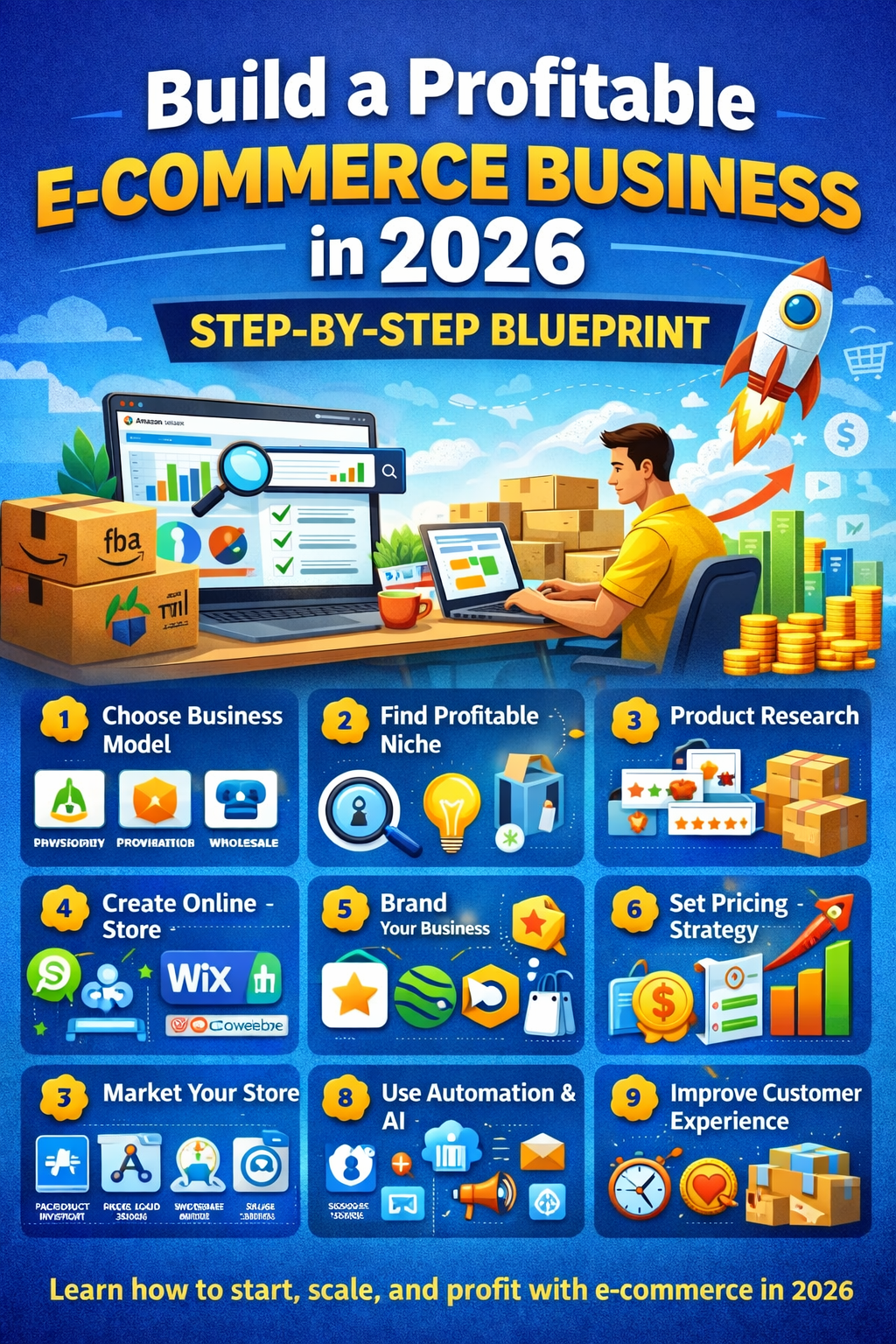
Step-by-step blueprint to build a profitable e-commerce business in 2026 and scale your online store successfully.
E-Commerce Business in 2026
E-commerce in 2026 is smarter, faster, and more competitive than ever before. With AI tools, automation, global shipping access, and mobile-first consumers, starting an online business has never been easier — yet succeeding requires strategy.
If you want to build a profitable e-commerce business in 2026, you must focus on smart product selection, branding, marketing systems, and long-term scalability.
This complete blueprint will guide you step-by-step from idea to profit.
1. Understand the 2026 E-Commerce Landscape
Before starting, you need to understand how online business has evolved.
🔹 AI-Driven Shopping
Customers now receive personalized product recommendations powered by AI.
🔹 Mobile-First Buyers
More than 70% of purchases happen through smartphones.
🔹 Fast Shipping Expectations
Consumers expect 2–3 day delivery as standard.
🔹 Social Commerce Growth
Platforms like Instagram, YouTube, and TikTok directly influence buying decisions.
In 2026, success depends on speed, branding, and customer experience.
2. Choose the Right Business Model
Your business model defines your profit potential and risk level.
1️⃣ Dropshipping
Low investment model where supplier ships directly to customers.
Pros:
- Low startup cost
- No inventory management
Cons:
- Lower profit margins
- Less control over shipping
2️⃣ Private Label (Most Profitable)
You sell products under your own brand.
Pros:
- High margins
- Brand control
- Long-term growth
Cons:
- Requires upfront investment
3️⃣ Print on Demand
Custom products like t-shirts, mugs, hoodies printed after order.
Good for creative entrepreneurs.
4️⃣ Wholesale
Buy bulk branded products and resell online.
Stable but competitive.
For long-term profitability in 2026, private label remains the strongest model.
Lead Generation Strategy 2026
In 2026, lead generation is the backbone of every successful online and offline business. Whether you are a service provider, e-commerce seller, consultant, freelancer, or agency owner — without leads, growth is impossible.
3. Find a Profitable Niche
Choosing the right niche is critical.
Good Niche Characteristics:
- Consistent demand
- Passion-based audience
- Problem-solving products
- Medium competition
Trending Niches in 2026:
- Home organization
- Fitness & wellness
- Pet products
- Eco-friendly items
- Smart accessories
Avoid saturated markets unless you have strong differentiation.
4. Product Research Strategy
Never select products randomly.
Step-by-Step Research:
- Check marketplaces like
- Amazon
- Shopify stores
- Etsy
- Analyze:
- Reviews
- Ratings
- Customer complaints
- Identify improvement opportunities.
Your goal is to improve existing products, not copy them.
5. Create Your Online Store
You can build your store using platforms like:
- Shopify
- WooCommerce
- Wix
Essential Store Elements:
- Clean design
- Fast loading speed
- Secure payment gateway
- Mobile optimization
- Clear product images
- Easy return policy
Professional branding increases trust and conversions.
6. Branding: The Key to Profit
In 2026, branding is everything.
Strong Brand Includes:
- Unique name
- Professional logo
- Consistent color scheme
- Premium packaging
- Clear brand message
Customers don’t buy products — they buy brands.
7. Pricing Strategy for Profit
Set pricing strategically.

Consider:
- Product cost
- Shipping
- Marketing budget
- Platform fees
- Target profit margin
Aim for at least 30–40% net margin.
Avoid competing only on price — compete on value.
8. E-Commerce Marketing Strategy in 2026
Traffic is the lifeline of your store.
1️⃣ Social Media Marketing
Use:
- Instagram reels
- YouTube shorts
- Influencer collaborations
Organic content builds trust.
2️⃣ Paid Advertising
Run ads on:
- Facebook Ads
- Google Ads
- TikTok Ads
Start small and scale winning campaigns.
3️⃣ Email Marketing
Build email list from day one.
Use:
- Welcome sequences
- Discount campaigns
- Abandoned cart recovery
Email marketing has one of the highest ROI.
4️⃣ SEO (Search Engine Optimization)
Optimize:
- Product titles
- Blog content
- Meta descriptions
Organic traffic reduces long-term ad dependency.
9. Automation & AI Tools
2026 e-commerce is powered by automation.
Use tools for:
- Inventory tracking
- Customer support chatbots
- Email automation
- Ad optimization
- Data analytics
Automation saves time and increases efficiency.
10. Customer Experience = Long-Term Profit
Repeat customers generate consistent income.
Improve experience by:
- Fast shipping
- Quality packaging
- Quick response time
- Easy returns
Happy customers become brand ambassadors.
11. Scaling Your E-Commerce Business
Once profitable:
- Add product variations
- Expand to international markets
- Launch new collections
- Partner with influencers
- Create subscription models
Scaling should be data-driven, not emotional.
12. Common Mistakes to Avoid
❌ Choosing saturated products
❌ Ignoring branding
❌ Overspending on ads
❌ Poor customer service
❌ Lack of patience
E-commerce success takes 6–12 months of consistent effort.
13. Investment Required in 2026
Approximate startup cost:
- Product inventory: $500 – $3000
- Website setup: $50 – $300
- Marketing budget: $300 – $1000
- Branding & packaging: Variable
You can start small and reinvest profits.
Final Conclusion
Building a profitable e-commerce business in 2026 is absolutely achievable — but only with the right strategy.
Focus on:
- Smart product research
- Strong branding
- Effective marketing
- Excellent customer experience
- Continuous improvement
E-commerce is not a get-rich-quick scheme. It is a real business that rewards consistency, patience, and data-driven decisions.
Start small. Learn fast. Improve continuously. Scale strategically.
About the Author